Inhaltsverzeichnis
- 1 Vaporizer Temperatures: How Many Degrees and How High Does It Get You?
- 1.1 Why vaporizer temperature matters so much
- 1.2 Basic temperature ranges and typical effects
- 1.3 How high can you get from a vaporizer?
- 1.4 Step by step: Finding the right temperature for medical cannabis
- 1.5 Temperature examples for popular herbs
- 1.6 Manual vaporizers: Hitting temperature without a display
- 1.7 Inhalation technique: Getting the most out of each draw
- 1.8 Cleaning and maintenance: Why it matters for temperature
- 1.9 Common temperature mistakes and how to fix them
- 1.10 FAQ: Questions about vaporizer temperatures
- 1.10.1 What is the ideal temperature for medical cannabis in a vaporizer?
- 1.10.2 Why does my vapor taste burnt?
- 1.10.3 Do I need different temperatures for different herbs?
- 1.10.4 From which temperature does it get unhealthy?
- 1.10.5 Is vaping really safer than smoking?
- 1.10.6 How do I find the right temperature with a manual vaporizer?
- 1.11 Conclusion: Use temperature as a tool, not a guess
- 1.12 References & further reading
Vaporizer Temperatures: How Many Degrees and How High Does It Get You?
Most people set their dry herb vaporizer somewhere around 180 to 200 °C without really knowing what that number means. Yet the temperature setting has a huge impact on effect, flavor and safety.
In this guide you will learn how different temperature ranges change your experience, what makes sense for medical cannabis and other herbs, how “high” you can expect to get from a vaporizer and how to dial in manual as well as electronic devices. We will also look at common mistakes, cleaning and a compact FAQ.
Why vaporizer temperature matters so much
When you vape, plant material is heated below the point of combustion. This avoids many smoke-related byproducts such as tar, carbon monoxide and polycyclic aromatic hydrocarbons compared to smoking.
However, high temperatures can still lead to unwanted compounds. Research found that significant amounts of benzene appear around 200 °C, while combustion starts at roughly 230 °C. This is why a sensible working range is so important:
- Too low: weak effect, wispy vapor, many actives remain in the bowl.
- Too high: harsh vapor, bad taste, more irritants and risk of charring.
- Balanced range: good effect and flavor with less stress on your lungs.
Basic temperature ranges and typical effects
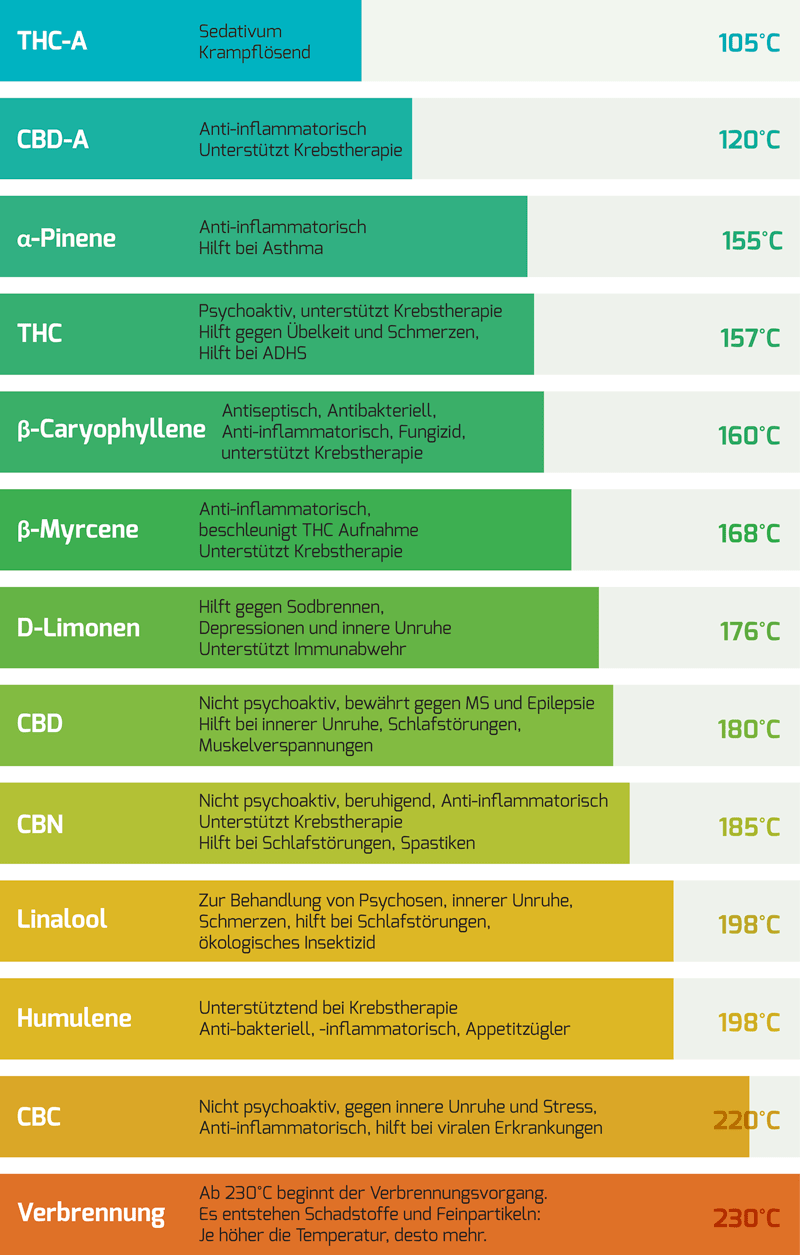
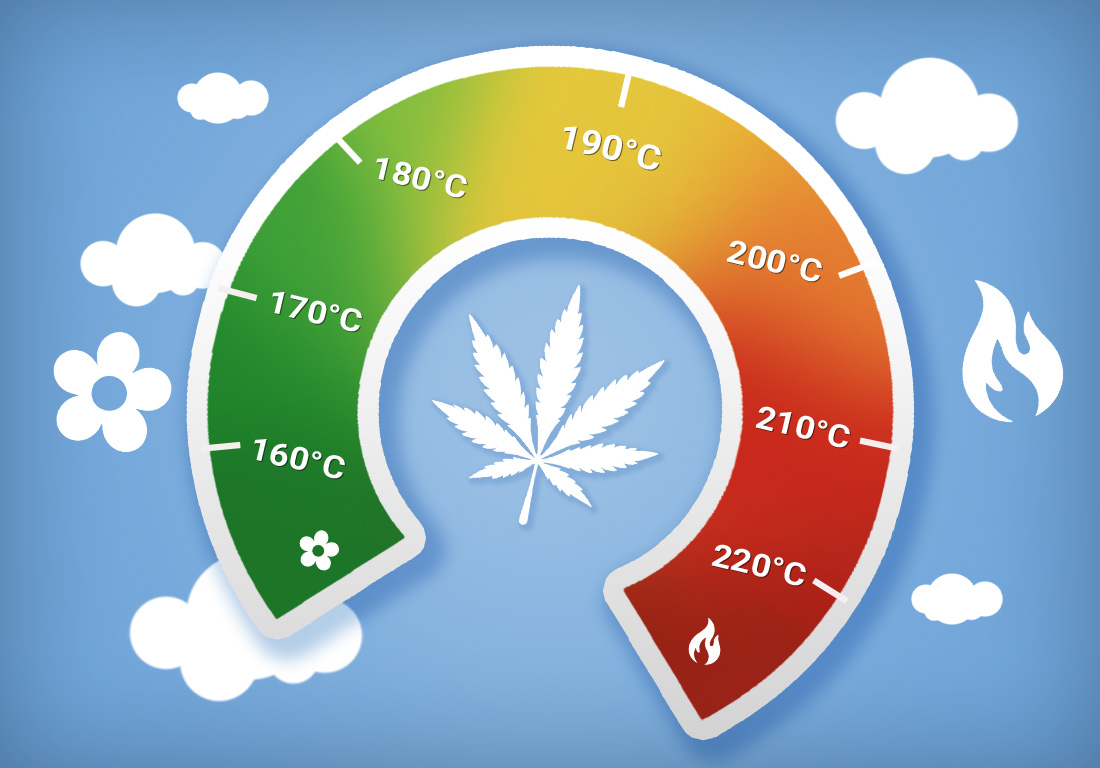
For cannabis flower, a practical range is roughly 160–220 °C. Within this window you can fine tune the experience quite precisely:
| Temperature range | Typical effect | Character |
|---|---|---|
| 160–175 °C | mild, mostly in the head | clear, functional, very flavorful vapor |
| 175–195 °C | balanced | good mix of mental and body effect, denser vapor |
| 195–210 °C | body focused | strong, more sedating, less flavor |
| above 210 °C | maximum extraction, more irritation | only rarely needed, higher risk of byproducts and charring |
Major cannabinoids such as THC, CBD and CBN evaporate between roughly 157 and 220 °C. In general, lower temperatures are associated with a more cerebral “mental high”, higher temperatures with a stronger “physical high”.
How high can you get from a vaporizer?
The intensity of the effect depends on several factors:
- THC content and profile of the strain
- Dosage (how much you load into the chamber)
- Your individual tolerance and body weight
- Device design and inhalation technique
Studies suggest that vaporizers can produce stronger acute effects than smoking at the same THC dose, because less of the active ingredient is destroyed by combustion. Exactly how “high” you will feel at a given temperature is highly individual and cannot be predicted by a simple number.
As a rough orientation for cannabis flower:
- 160–180 °C: light, clear-headed effect, good for daytime and microdosing.
- 180–200 °C: clearly noticeable yet balanced effect.
- 200–210 °C: strong, body-oriented experience, usually better suited for evening use.
If you use prescribed medical cannabis, always follow your doctor’s instructions and increase temperature slowly in small steps.
Step by step: Finding the right temperature for medical cannabis
Check your material: too dry or too moist?
- Very dry flower: heats up fast and can feel harsh. Often you can use a slightly lower temperature to avoid irritation.
- Fresh or moist flower: may take a while before producing satisfying vapor. A short “flavor run” at 135–150 °C can help to gently dry the material while already releasing some terps.
Prepare your cannabis properly
- Grind to a medium-fine consistency – not dust.
- Fill the chamber loosely so that air can move through the material bed.
- Use modest bowl sizes and finish them completely instead of overpacking.
Consider the heater type: conduction vs convection
Your device design has a strong impact on how the set temperature translates into actual herb temperature:
- Conduction (direct contact heating): the herb touches a hot oven wall. These devices often feel hotter at the same setting, so many users prefer slightly lower temperature numbers, for example 180–195 °C for cannabis.
- Convection (hot air, e.g. many desktop units): hot air flows through the bowl. Temperatures around 185–205 °C are common starting points.
- Hybrid devices sit somewhere in between.
Use temperature stepping
- Start at about 170 °C.
- Take several slow, but consistent draws and evaluate flavor, vapor density and effect.
- Increase in 5–10 °C increments until you reach the desired result.
- If vapor becomes harsh or tastes roasted, step back down.
Quick checklist for your sweet spot
| Step | Action | What to look for |
|---|---|---|
| 1 | Start at 170 °C | very smooth vapor, mild effect |
| 2 | Increase to 185 °C | more vapor, clearer effect |
| 3 | Increase to 200 °C | strong, full-body effect |
| 4 | Observe your reaction | too harsh or heavy? step down again |
Temperature examples for popular herbs
Many dry herb vaporizers can also handle classic medicinal herbs. These usually require lower temperatures than cannabis.
| Herb | Recommended range | Typical use |
|---|---|---|
| Chamomile | 130–150 °C | relaxation, calming |
| Lavender | 130–160 °C | stress relief, inner balance |
| Valerian | 160–175 °C | sleep support |
| Thyme | 130–150 °C | expectorant, for cough |
| Mint | 150–170 °C | refreshing, cooling |
| Medical cannabis | 180–210 °C | pain, spasticity, sleep, appetite (always under medical supervision) |
Manual vaporizers: Hitting temperature without a display
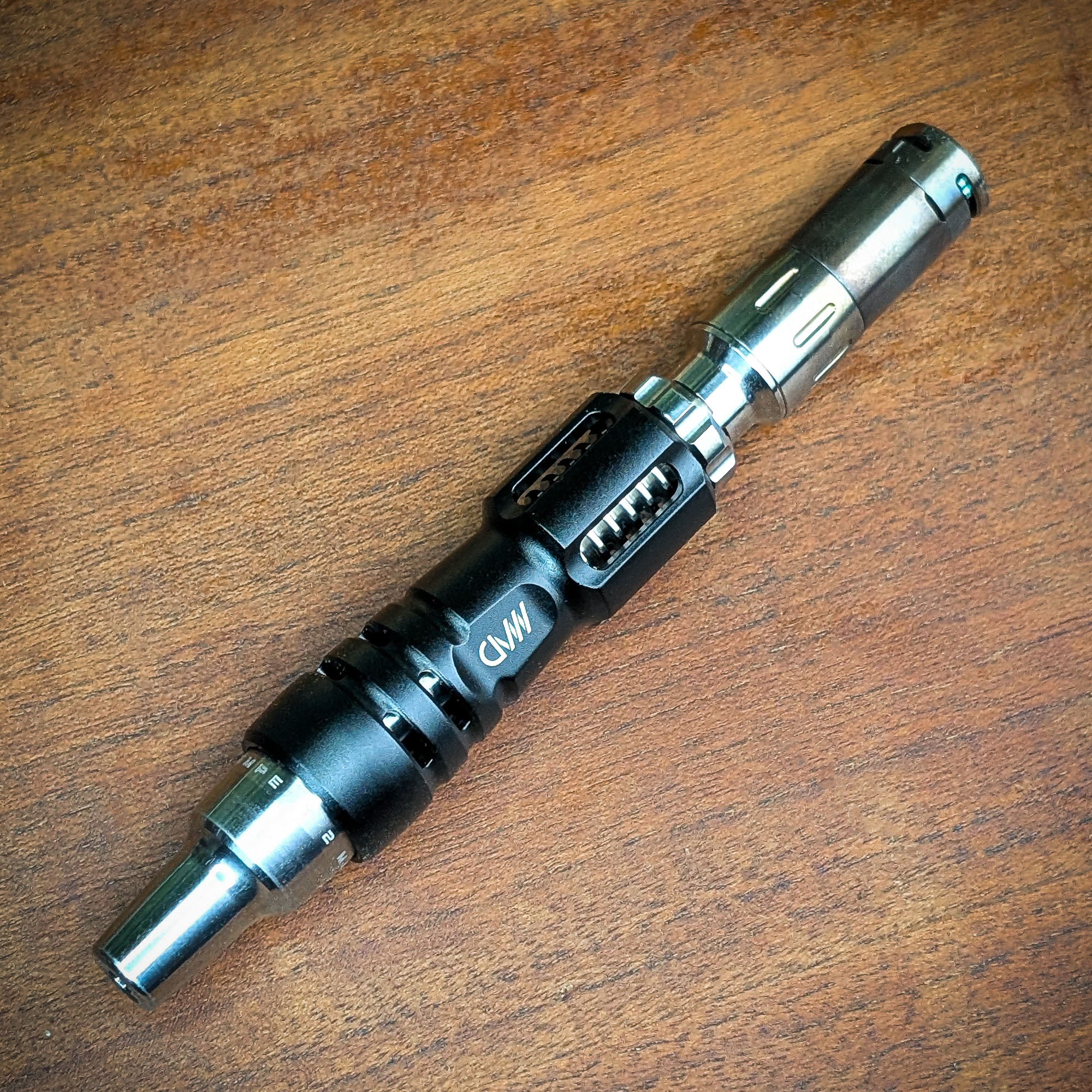
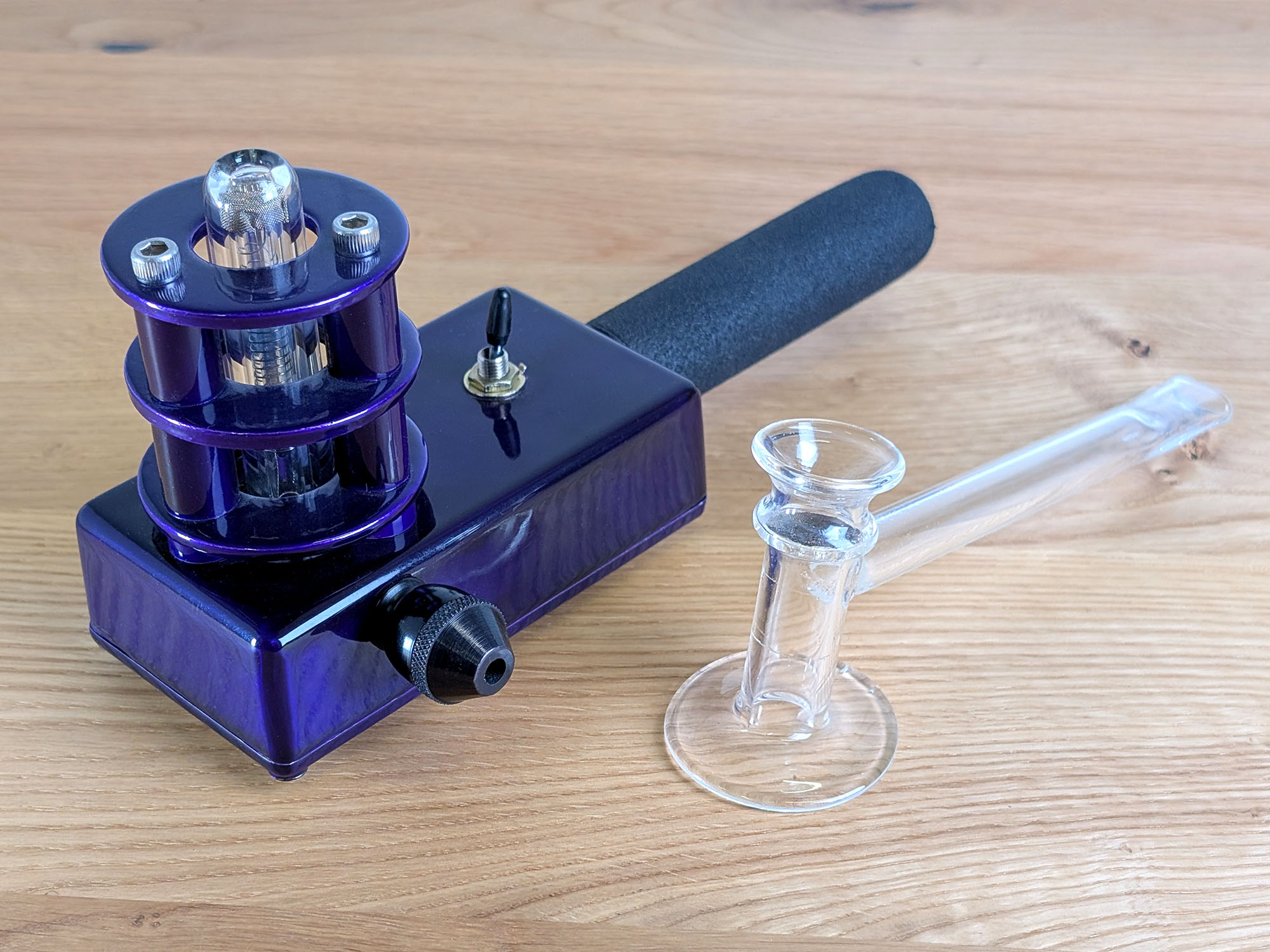
With flame-powered devices like DynaVap or other thermal extractors you do not set a number. Instead, you control temperature indirectly by:
- distance between flame and cap or heater
- duration of heating
- constant rotation
- cool-down time between heating cycles
Useful rules of thumb include:
- Always rotate the device slowly while heating to avoid hot spots.
- For DynaVap caps, stop heating immediately after the first click and start inhaling.
- Use several short heating pulses instead of one long blast.
- Let taste guide you: once it turns sharp or smoky, you went too far.
With practice, you will be able to estimate whether you are more in the low, medium or high range of your device just from taste and vapor density.
Inhalation technique: Getting the most out of each draw
- Inhale slowly and steadily for about 5–8 seconds.
- Hold the vapor in your lungs for 2–3 seconds, no need to push it longer.
- Pause briefly between draws so your lungs and device can recover.
- Drink enough water to keep your airways comfortable.
Cleaning and maintenance: Why it matters for temperature
A dirty bowl or clogged screens change airflow and effective herb temperature. Typical effects include:
- Uneven extraction: some parts of the bowl get too hot, others stay green.
- Off flavors from old residue.
- The need to crank up temperature just to get any vapor.
Basic maintenance rules
- Tap out crumbs and spent material after every session.
- Clean mouthpiece and screens regularly with suitable cleaners or alcohol wipes (always follow manufacturer instructions).
- Only clean plastic parts with products that are explicitly approved.
- For devices with internal sensors or electronics near the bowl, stick strictly to the manual.
Common temperature mistakes and how to fix them
| Problem | Likely cause | Fix |
|---|---|---|
| Weak vapor, little effect | temperature too low, moist flower, overpacked bowl | raise temperature slightly, pre-dry at low temp, pack more loosely |
| Harsh, hot vapor | temperature too high, very dry flower, dirty mouthpiece | lower temperature, drink water, clean device |
| Burnt taste | close to combustion range, heating too long without drawing | back off significantly, shorten heating cycles, take regular puffs |
| Inconsistent effects | changing bowl sizes and strains, varying draw speed | keep packing, material and draw style as consistent as possible |
FAQ: Questions about vaporizer temperatures
What is the ideal temperature for medical cannabis in a vaporizer?
For most medical strains, a practical range is 180–210 °C, depending on strain, moisture, device and desired effect. Start at the lower end and slowly increase until flavor and effect feel right. Follow your doctor’s dosing instructions.
Why does my vapor taste burnt?
The most common reasons are a temperature that is set too high, heating for too long without drawing or a dirty oven and screens. Reduce temperature, shorten heat-up periods and clean your device thoroughly.
Do I need different temperatures for different herbs?
Yes. Every plant has its own range. Many classic herbs work best between 130 and 180 °C, while cannabis usually needs higher temperatures. Adjust in 5–10 °C steps until taste and effect match your goal.
From which temperature does it get unhealthy?
Around 200 °C and above, the risk of unwanted compounds like benzene increases, and around 230 °C you enter combustion territory. Many experts therefore recommend staying below about 200–210 °C whenever possible.
Is vaping really safer than smoking?
Medical-grade vaporizers have been shown to reduce combustion byproducts significantly and are considered a lower-risk option compared with smoking cannabis. Still, cannabis vapor can contain toxic substances, especially at high temperatures and with frequent use. “Safer” does not mean “harmless”.
How do I find the right temperature with a manual vaporizer?
Use short heating pulses, rotate the device in the flame, listen for clicks (if your device has them) and let taste and vapor density guide you. This is more about learning a rhythm than chasing an exact number (uncertain information, based on user practice rather than controlled trials).
Conclusion: Use temperature as a tool, not a guess
Temperature is the main control knob on any vaporizer. Once you understand what low, medium and high ranges do to flavor, effect and byproducts, you can shape your sessions very precisely instead of relying on luck.
For cannabis, 160–220 °C is a realistic overall framework. In practice, many users end up somewhere between 180 and 200 °C, depending on material, device and desired outcome. Rather than chasing a mythical “perfect” number, focus on slow adjustments, good cleaning habits and listening to your body.
If you are unsure which settings work best for your device or prescription, talk to your doctor for medical questions and reach out to a specialist retailer for technical support.
References & further reading
- Health Canada – Cannabis accessories for inhalation: Minimizing your risk when smoking, vaping and dabbing – Official guidance on smoking, vaping and dabbing risks.
- NORML/MAPS Study Shows Vaporizers Reduce Toxins in Marijuana Smoke – Feasibility study on vaporizers, THC delivery and benzene/combustion thresholds.
- Gieringer D – Cannabis Vaporization: A Promising Strategy for Smoke Harm Reduction – Detailed analysis of temperature ranges, pyrolytic toxins and harm reduction.
- Lanz C et al. (2016) – Medicinal Cannabis: In Vitro Validation of Vaporizers – Laboratory validation of vaporizers (incl. Volcano Medic) for THC yield and byproducts.
- Spindle TR et al. (2018) – Acute Effects of Smoked and Vaporized Cannabis in Healthy Adults – Crossover trial comparing smoked vs. vaporized cannabis, blood levels and subjective effects.
- Chaiton M et al. (2021) – Are vaporizers a lower-risk alternative to smoking cannabis? – Review of toxin exposure, carbon monoxide and respiratory symptoms with vaporizer use.
- MacCallum CA et al. (2024) – Cannabis vaporisation: Understanding products, devices and clinical application – Recent overview of devices, temperature ranges and clinical considerations.
- Shiplo S et al. (2016) – Medical cannabis use in Canada: vapourization and modes of delivery – Patterns of medical cannabis use and reasons for choosing vaporizers.
- Bedrocan – Smoking cannabis vs vaporization – Information from a licensed producer on advantages of vaporization over smoking.
- Fundación CANNA – Vaporizer usage: safety and toxicology – Overview of safety, toxicology and comparison with combustion.